
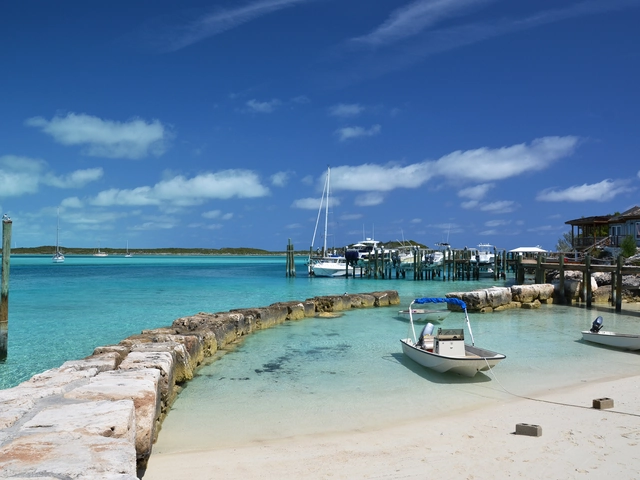
Green Turtle Cay is one of the barrier islands off mainland Great Abaco The Bahamas. It is considered part of the "Abaco Out Islands" and is 3 miles (4.8 km) long and ½ mile wide. It was named after the once abundant green turtles that inhabited the area.
The population of the island is about 450 and its main settlement is New Plymouth which was founded in the 18th century. The architecture of the older homes in the village is unique in the Bahamas, with steep-pitched roofs, originating with settlers from New England. New Plymouth contains a post office, a bank, a customs and immigration office, four grocery stores, several restaurants, bars, and churches and there is a museum featuring the paintings of noted Bahamian painter Alton Lowe. The village can be walked in less than 15 minutes end to end. While cars are allowed on the island, golf carts and bicycles are the usual mode of transport. Both are easily rented for those visiting the island.
Green Turtle Cay is known for its beaches and has several full-service hotel-resorts with boat marinas. These are Bluff House and the Green Turtle Club. There is also a boat repair yard with haul-out slips. Green Turtle Cay is a stopover-point for southbound vessels during periods of rough seas in the Whale Cay Passage. Lobstering and tourism are the main industries of the island today.

Head for the Hills! Mexico's Coolest Mountain Towns This Summer
Don’t fight the heat on holiday in Mexico this summer – escape it altogether!... read more

A New Viking on the High Seas
The Viking Sky has set sail on its maiden voyage. It's the 3rd ship... read more

Celebrate the 20th Anniversary of Harry Potter Films in these British Locations
The most famous teen wizard of all time has magicked his way into the hearts ... read more

Personalized Golf Cruises on Hapag-Lloyd
Golf & Cruise voyages from Hapag-Lloyd Cruises combine international golf... read more
4 Tips to Navigate Travel's Re-Opening Like an Expert
Recent weeks and days have seen a flurry of changes in travel restrictions an... read more